Getty Images: Licensed under the Unsplash+ License
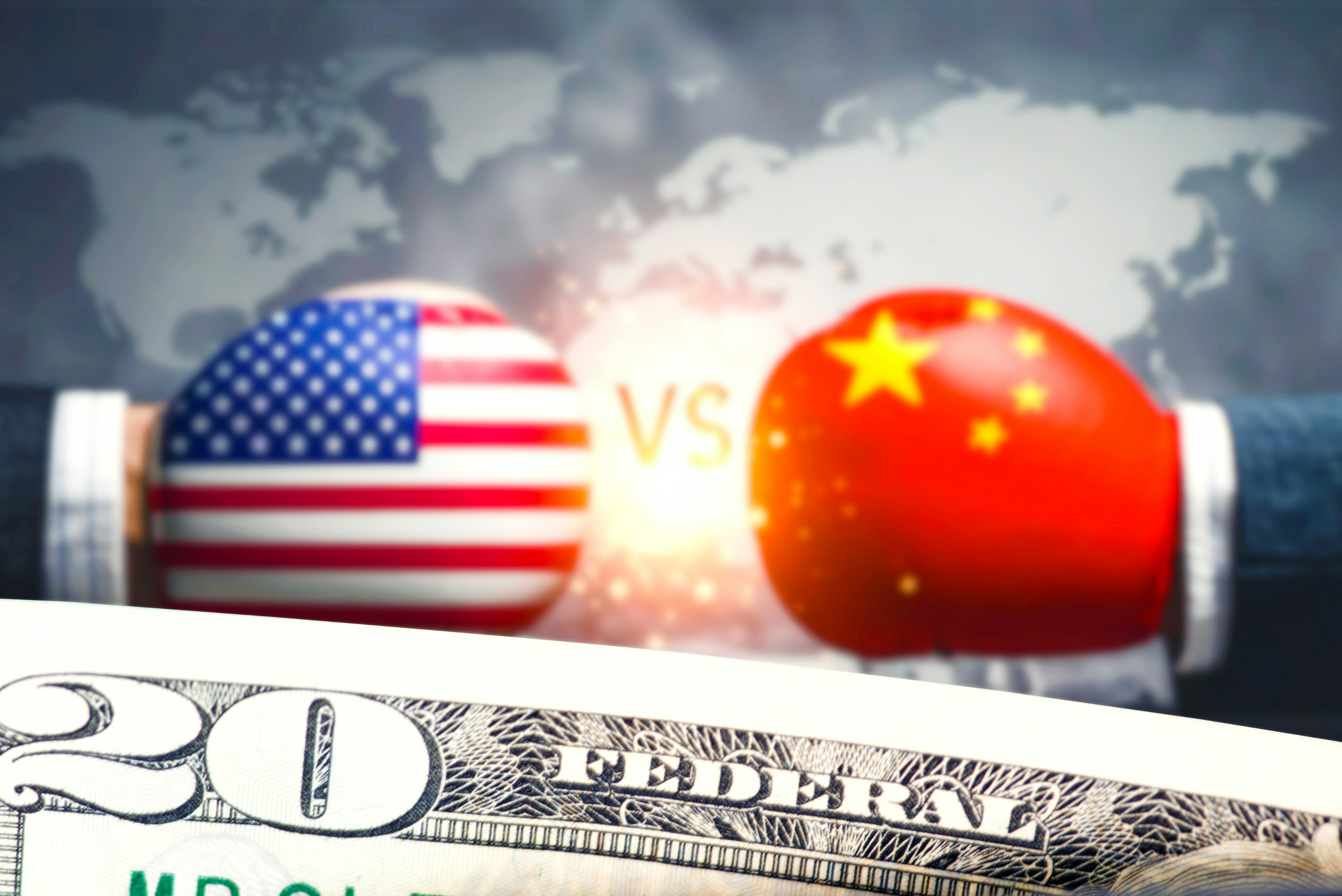
You can see it with the growing mumbling of the China Hawks as US-China relations fail to advance the geopolitical pushback and great power competition so determinedly described, and in fact called for by these folks – the China Hawks. And presumably we are about to see a big bilateral summit between Xi Jinping and Donald Trump with Trump’s visit to China at the moment set for May 14-15th. I say presumably since this meeting has already been delayed due to the Iran war. So, a Summit – maybe yes, maybe no.
But back to the US China Hawks for just a moment. Dan Drezner pointed to the eagerness of China Hawks in joining up to the second Trump administration – presuming, it seems, the US great power target would be China. As he described in his recent Post at Drezner’s World titled, “Fear and Loathing Among the China Hawks”:
“With Trump’s second term, a lot of China hawks joined, surely convinced that they could articulate and implement a grand strategy that de-emphasized the European and Middle Eastern regions in favor of prioritizing the Pacific Rim. Indeed, this was Undersecretary of Defense Elbridge Colby’s worldview — and his attempt to implement it led some folks to fret that he was exercising too much control over U.S. foreign policy.”
But as Drezner recounts:
“That fear turned out to be spectacularly wrong. But it’s worse than that. In 2025 China hawks could semi-plausibly claim that Trump was simply rightsizing U.S. strategic priorities to allow for a greater focus on China. In 2026, that dog won’t hunt. Indeed, ever since he launched the war with Iran, Trump has been noticeably reticent in critiquing the PRC, despite multiple, ongoing reports that China is aiding Iran militarily.That fear turned out to be spectacularly wrong.”
So what do we see then as the shape of the global order or maybe more definitively the global disorder and the state of great power competition in the continuing conflict in the Mideast? According to Suzanne Nossel, a columnist at Foreign Policy and the Lester Crown senior fellow for U.S. foreign policy and international order at the Chicago Council on Global Affairs, in a recent piece titled, “Hedging is the New Normal, at FP:
“We are living in a new world of hedgers. The shocks of the last several years—COVID-19, Russia’s war in Ukraine, U.S. President Donald Trump’s tariffs, and the Iran conflict—have upended how nations approach international affairs. The smooth flows of a globalized and rules-based world have clotted into uncertainty, forcing states to find new pathways for trade, diplomacy, resource extraction, and defense cooperation.”
So what is hedging and how does it impact the global order? Well, according to Nossel again:
“Hedging is the practice of avoiding exclusive dependence in a world of unreliable partners. It involves cultivating competing relationships across different domains so that no crisis or betrayal will leave a state out of options.”
“States are no longer hedging within a system that is episodically volatile but out of a recognition that there no longer is much of a system at all. The rise of what we might call “hedgemony” is both a response to the reshuffling of the global order and an accelerant of this transformation. Although these moves are being pursued by individual governments in search of stability and security, the net result may be a world that is less predictable and even more dangerous.”
So where does that leave the state of global order, or, again might I suggest, disorder:
“Now that the spell of innocuous interdependence has been broken, nations are moving with grim resolve to foster diversified, even redundant, dependencies. Countries are increasingly hedging their bets with hegemons—namely, by seeking strong ties with both China and the United States—while also striving to lessen hegemonic dependency through greater self-sufficiency and diversified relationships. Even the superpowers are hedging: The Biden administration’s CHIPS and Science Act and Trump’s Pax Silica both sought to reduce reliance on China and, by association, Taiwan; Beijing’s push for technological indigenization, domestic food production, and the expansion of renminbi-based cross-border payments infrastructure is all part of an effort to shield itself from Washington.”
Though I am not convinced that Trump sees the logic of dampened tensions with China, it appears that at least for the moment Trump has “pulled his punches with China” much to the chagrin of China Hawks. And we may yet see some continued calm as a result of the potential visit to China.
But where does this larger hedging environment leave the players? Well, Nossel reflects on it and suggests the following:
“Hedging reflects the world as it is, but it will also reshape it. For one, it will produce a less efficient and more nation state-directed global economy. Transaction costs for government and business will rise in a world that is more compartmentalized. …”
“Hedging will also weaken the universal aspirations of the liberal order and make geopolitics more transactional. Considerations of democracy, rights, and shared political values will quietly recede as criteria for partnerships. Nations will deal more readily with dissimilar regimes, be more willing to overlook internal repression, and treat ideological kinship as a secondary concern. …”
“Hedging will also have serious security consequences. With states less able [to] rely on one another, it’s likely that armament stockpiles will become larger, nonproliferation regimes will be tested, signals will be harder to read, and skirmishes below the threshold of war will intensify. Expect more testing of boundaries—including by Russia in Europe, by China in the Taiwan Strait, and by both powers when it comes to thwarting the United States through cyber and financial brinkmanship. …”
“The rewiring of international circuitry to ward off shocks and disruptions will privilege the states that can assemble nimble teams of forecasters and negotiators capable of making course corrections and seizing opportunities in real time. For instance, Ukraine, which has shown remarkable ingenuity in its fight against Russia, is already providing a paradigm for adaptability in defense and for diversifying its sources of technology and weapons.”
And finally, and interestingly, Nossel reflects back on how Middle Powers (MPs) may react to this disorder by acting in part in the way that Canadian Prime Minister Carney suggested:
“After all, middle and smaller powers with limited leverage to coerce others or flex their might may have the most to gain from a more ordered geopolitics. If they summon the will, they might be able to join forces to reinvigorate or invent new global institutions, forming pacts and institutions that offer a semblance of rules, norms, and predictability.”
For sure we will continue to monitor MP behavior and how they advance potentially multilateral interests.
Now back to Dan Drezner and his conclusion on Trump policy. Now Dan is no China Hawk but his conclusion is telling:
“When I look at what this administration is doing in foreign policy, however, it’s hard to describe it as “hawkish” towards China. Instead, all I see is the current administration pissing away whatever strategic advantages the United States possesses in a diversionary conflict. The U.S. ability to tackle the challenge of a rising China has been compromised.”
And finally some thoughts from colleague Ryan Hass. Ryan is the director of the John L. Thornton China Center and the Chen-Fu and Cecilia Yen Koo Chair in Taiwan Studies at Brookings and also a senior fellow in the Center for Asia Policy Studies. Now Ryan takes the temperature of the competition and comes away with a moderate though unenthusiastic view of Trump’s actions, notably with China. In a piece penned in March Ryan suggests the following in this FA article:
“After a decade of elevated tensions, Washington and Beijing now find themselves navigating relatively calm waters. Last October, U.S. President Donald Trump and Chinese leader Xi Jinping reached an agreement in Busan, South Korea, to pause the trade war between their two countries. The truce paused new U.S. tariffs and rolled back Chinese restrictions on American access to rare-earth elements and magnets. That reprieve is real—but fragile.”
“Over the longer term, much of U.S.-Chinese strategic competition will turn instead on which country exercises greater focus on nurturing its sources of strength. China is currently outperforming the United States on this score. The United States, meanwhile, has again found itself drawn into a costly conflict abroad while it practices fiscal indiscipline at home. To take advantage of this current period of fragile stability in its relations with Beijing, Washington will need to wind down its military operations in Iran and refocus on a more consequential national imperative: rebuilding capacity to compete with China.”
Ryan suggests that there are four factors that account for Trump’s muting of the geopolitical conflict with China. According to him the factors include:
“Trump’s shift has been motivated by at least four related factors, which broadly demonstrate his apparent judgment that there is more to gain from productive and predictable relations with China than adversarial ones. First is the growing number of challenges confronting Trump abroad—including in Gaza, Iran, Ukraine, and Venezuela—and rising domestic pressures related to affordability and immigration. With such a full plate, it stands to reason that Trump would want to reduce volatility in U.S. relations with China.”…
“Trump’s recalibration also appears to be the result of a recognition that China can inflict serious damage in response to American economic coercion. The administration appeared to be caught off-guard by China’s move to weaponize rare-earth, critical mineral, and magnet exports in response to Trump’s tariff escalation in April 2025.” …
“American voter sentiment, too, has pushed Trump to change course. Although elite preferences in Washington remain hawkish toward China, many Americans are increasingly less so.” …
“Finally, Trump values making deals, and especially with Xi. He views stable and smooth relations with China as the most lucrative path for securing the agreements he covets on trade, TikTok, and curbs on chemicals used to make fentanyl. He appears willing to subordinate long-standing issues of bilateral tensions, such as China’s bullying of U.S. allies, to secure near-term tangible benefits such as Chinese purchases of U.S. soybean exports.”
Is the current muted relationship durable? Likely not; it is Trump after all, but then again possibly as a number of commentators, notably, Jake Sullivan, an American attorney who served as the U.S. national security advisor from 2021 to 2025 under President Joe Biden, point recently to the need for the US to maintain a determined focus on technological dominance as described by him in FA in a piece titled, “The Tech High Ground: What It Will Take to Gain the Advantage Over China”. Still, As Ryan concludes in his piece:
“The United States, on the other hand, has a less centralized plan for accelerating broader economic growth. The Trump administration has correctly identified economic and technological power as the foundations of twenty-first-century national security. It also seems to believe that the United States’ possession of such power has been eroding relative to China’s. The remedy, in Trump’s view, is to lower tensions with Beijing and concentrate financial and human resources on rebuilding American manufacturing capacity with an emphasis on the defense industrial base.”
“The administration’s lack of visible preparation for Trump’s upcoming visit has puzzled many analysts. But this is a feature of Trump’s approach to China, not a bug. When it comes to the United States’ relationship with China, Trump is the center of attention.”
So there is the current balance and the incentives to maintain the current US-China calm and maintain that moderation between the two great powers. And if the Summit proceeds we will see what such a US-China leaders’ gathering brings and then propels the two powers afterword.