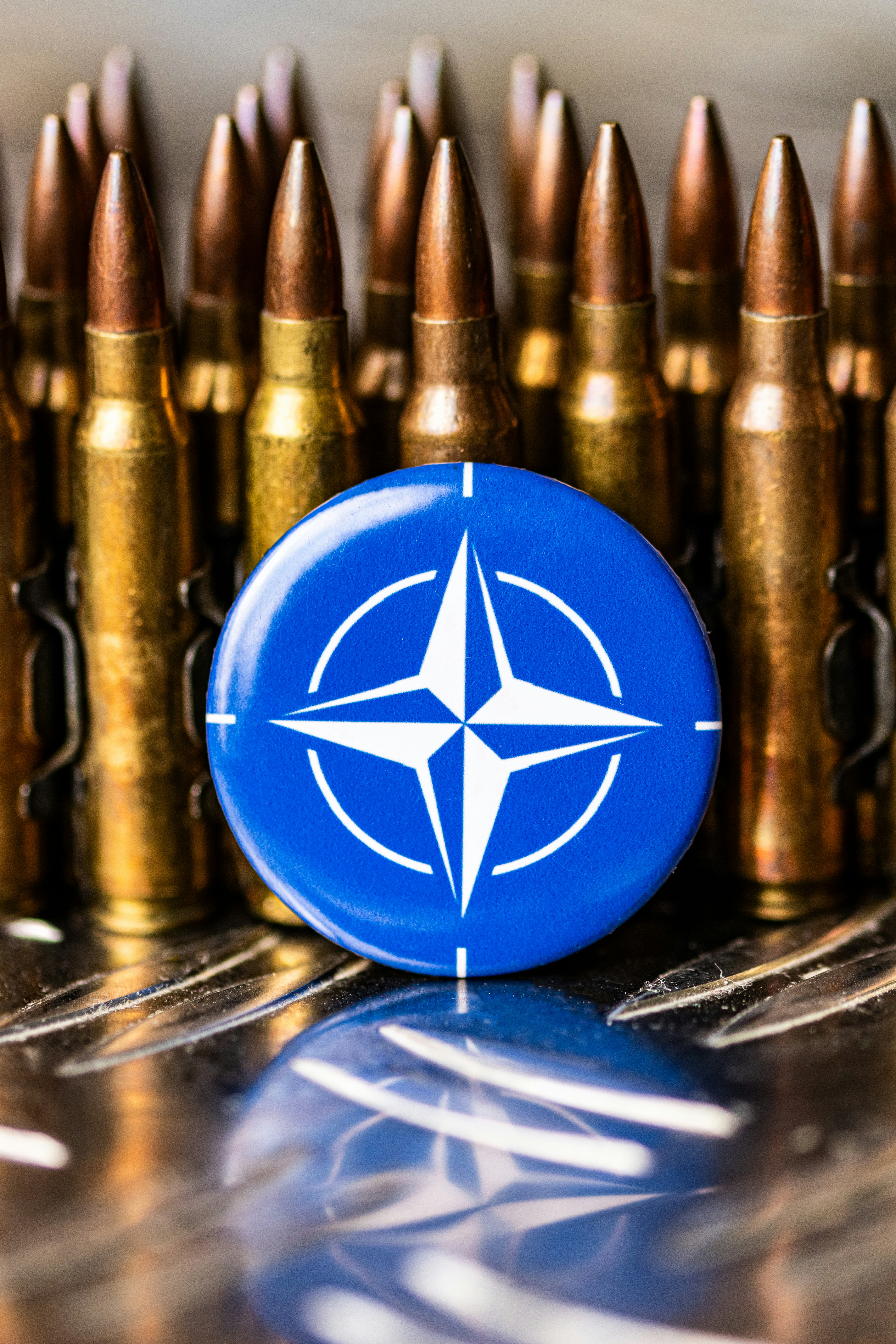
Image Credit: Photo by Marek Studzinski on Unsplash+
It would be hard to replicate ‘the buzz’ that accompanied US Vice President Vance’s remarks from last year’s Munich Security Conference (MSC), but I have a feeling this year’s gathering will likely be equally eventful if not more so.
This year will very likely bring highly insightful remarks; but also likely – equally chilling warnings. In fact they have already commenced. This MSC convenes – a bit hard to believe but in a period of even greater concern for the Trump administration’s willingness to protect America’s long standing security commitments. As the 2026 Munich Security Report (MSR) declares:
“The extraordinary attention Munich is attracting this year is not only a reflection of the many conflicts and crises that dominate the global agenda. It is also a result of the changing role of the United States in the international system. For generations, US allies were not just able to rely on American power but on a broadly shared understanding of the principles underpinning the international order. Today, this appears far less certain, raising difficult questions about the future shape of transatlantic and international cooperation.”
Wolfgang Ischinger, the Chairman of the Conference further announces in the Report’s Foreword:
“These tensions were already visible at last year’s Munich Security Conference. The speech delivered by US Vice President J.D. Vance, which attracted considerable attention well beyond Munich, illustrated just how different the current administration’s perspective on key issues is from the bipartisan liberal-internationalist consensus that has long guided US grand strategy. The implications of this shift for Europe, but also for the world at large, are hard to overstate”.
Added to this is the picture of the international order described in the early words of the Executive Summary of the Report:
“The world has entered a period of wrecking-ball politics. Sweeping destruction – rather than careful reforms and policy corrections – is the order of the day. The most prominent of those who promise to free their country from the existing order’s constraints and rebuild a stronger, more prosperous nation is the current US administration. As a result, more than 80 years after construction began, the US-led post-1945 international order is now under destruction.”
Jim Tankersley of the NYTimes, in an article, titled, “Trump Is a Global ‘Wrecking Ball,’ European Security Experts Say” describes the fraught environment surrounding this year’s security gathering:
“This year’s conference, which opens on Friday, has taken on a more urgent tone amid growing concerns in Europe over Russian military aggression and Mr. Trump’s rapidly refashioned security strategy, including his ongoing efforts to pry Greenland from Denmark. The report summarizes those concerns, which have been repeatedly voiced by European officials in recent months, in terms that are more strident and detailed than many European leaders have typically dared to express.”
“Under Donald Trump,” they said, “the United States has largely abandoned the role of the ‘leader of the free world.’”
Then Jim and his colleague Steven Erlanger, again in the NYTimes, added this to describe Europe’s reaction to Trump policy toward the continent:
“In the year that followed, President Trump imposed tariffs on European goods. He pushed to end the war in Ukraine on terms largely favorable to President Vladimir V. Putin of Russia and threatened to pry Greenland from Denmark by any means necessary. He mocked European leaders in a bullying speech in Switzerland, declaring Europe would be nothing without the United States.”
“It has been a dizzying unraveling of the friendship that bound the West together for three-quarters of a century, since World War II. That has left European leaders more wary — and in some cases, more defiant — toward America, as they prepare to meet again in Munich, starting Friday, for Europe’s largest annual gathering of politicians and security officials.”
“Diplomats and heads of state across the continent say they no longer expect relations with America to revert to a pre-Trump normal, even after Mr. Trump leaves office. They have accelerated efforts to reduce their military and economic dependence on the United States, even as they continue to court the president with flattery in an effort to maintain influence with him on Ukraine and other global issues.”
““Trans-Atlantic relations have changed, and no one in this room says this with more regret than I do,” Chancellor Friedrich Merz of Germany, who will open the Munich conference with a speech, said last week. “But nostalgia and reminiscing about bygone better times won’t help us.””
And the Chairman Wolfgang Ischinger had this to add:
““Of course, we’ve had a serious loss of trust, no doubt about it,” … “Of course, trust can be rebuilt. But we all know losing trust is easier than rebuilding it.””
So where is Europe in the context of its relationship with the US and its security alliance, most critically NATO. Again, from the two NYTimes reporters the following from the key European player, Germany and its Chancellor:
“Most European leaders still say the trans-Atlantic alliance needs preserving. German officials suggested this week that Mr. Merz would use his Munich speech to build out a new vision for Europe’s role in the partnership — one that rests on increased military spending; stronger economic growth; and deepened ties with other partners, like India, Africa and swaths of the Middle East.”
“Mr. Ischinger, the chairman of the Munich conference, said he hoped it would begin two processes: repairing the U.S.-Europe relationship and pushing Europe to act concretely to reduce its dependencies on America.”
We will see and hear, I suspect, in the next day or so the political and policy figures describing the threats to European and NATO security from Trump security policies and European responses. Some have already painted a dire picture for NATO and European security. Take for instance Rebecca Lissner, who was Deputy National Security Adviser to Vice President Kamala Harris and is currently a Senior Fellow at CFR. In FP she wrote this about the current state of NATO as she sees it:
“Rather than lulling themselves into a false sense of security, the United States’ European allies must accept an uncomfortable—and unfortunate—reality: NATO has become a zombie alliance. Formally, its procedural features remain intact. There is a bustling headquarters in Brussels, an empowered American supreme allied commander, and formidable military capabilities deployed across the continent.”
“But the alliance’s animating spirit—the U.S. commitment to collective defense under Article V of the founding charter—is gone. Without that life force, NATO lacks the credibility and trust that have reassured allies and deterred adversaries for decades. A revival is possible, but it will require Europeans to take ownership of the alliance before it’s too late.”
Now the President of CFR, Michael Froman is not quite so pessimistic and downtrodden as is Lissner. In examining the current and near future state of NATO and European security he has this to say in a guest essay in the NYTimes:
“The conference, which began on Friday, is a fork in the road for the trans-Atlantic relationship. Of the two paths before us, one is a lasting recalibration of the NATO alliance with a strong Europe at its core, capable of defending itself while sustaining a healthy, if diminished, partnership with the United States. The other is continued trans-Atlantic infighting over shared values, national interests and what counts as a fair division of responsibilities on all sides.”
“The latter path is no longer just a meddlesome aspect of an otherwise sound alliance. It threatens a messy separation between the United States and its foremost allies that would hurt European and American security.”
“The United States should collaborate with NATO even if it reduces its commitment to providing European security. Washington should remain central to joint efforts to end the Russia-Ukraine war and secure Ukraine’s future, shoring up Europe’s eastern and northern flanks and expanding arms sales and military-industrial partnerships.”
“Europe has its own hard decisions to make. The notion of a stronger, better integrated Europe, envisioned by President Emmanuel Macron of France; Ursula von der Leyen, the president of the European Commission; and other political leaders, remains painfully theoretical, hampered by the bloc’s bureaucratic inertia. The former Italian prime ministers Mario Draghi and Enrico Letta, among others, have already defined the goals: a unified capital market, a continentwide innovation ecosystem, a defense industrial base that transcends national borders and governance committed more to productivity and investment than to procedure and overregulation” (emphasis added).
“There is momentum behind this vision. But “strategic autonomy,” as it has been labeled, demands political trade-offs, such as defense mobilization, deficit spending, diminished sovereignty and uneven gains, which remain blocked by the parochial interests of many member states.”
What Froman describes, ‘strategic autonomy’ is principally in the hands of today’s European leaders. Do they have the collective will? There are doubts; I have doubts. But we will track what is said and we will listen carefully to those speaking out at the MSC. For myself, I am looking for the birth of a first ‘coalition of the willing’ to carry forward ‘strategic autonomy’ and sustain and possibly enhance the RBIO. Consensus for the moment is I believe a ‘step too far’. And it is unnecessary in the current circumstances. Forward action will lean on plurilateralism if European leaders, or at least some of them, grasp the immediate future.