It is clear that Europe is not perceived as a friend by President Trump, especially the intergovernmental EU of 27 nations. There isn’t, it seems, an instrument of multilateralism that Trump is unwilling to dismiss. Mark Leonard, the Director of the European Council on Foreign Relations underscores the generated tensions by the President and describes in PS Prime Minister (PM) Mark Carney’s ‘rupture’ view of today’s global order:
“Although the crisis over Trump’s demand that Denmark hand over Greenland to the United States appears to have been defused for now, the idea of a united West has been dealt a fatal blow.”
“Even if Trump keeps his promise to refrain from using force against a NATO ally, his (and all his advisers’) boorish behavior in the run-up to Davos and at the conference has raised lasting doubts about America’s reliability, even in the minds of some of the most committed Atlanticists.”
“Equally important, as one European leader put it to me in private, the lurching unpredictability of US foreign policy under Trump reflects American weakness rather than strength.”
And the lessons Europe draws from recent Trump action: Leonard gives us a likely insight to current European leadership thinking:
“The Greenland resolution that Trump announced on Truth Social on January 21 appears to have been the product of tireless diplomacy by NATO Secretary-General Mark Rutte, Finnish President Alexander Stubb, and Norwegian Prime Minister Jonas Gahr Støre. But more importantly, these “Trump whisperers” succeeded because Europe had shown unusual resolve in drawing red lines and signaling its willingness to defend them.”…
“But unlike Europe’s feeble and ultimately unsuccessful response to Trump’s “Liberation Day” tariffs, the assertion of European sovereignty in recent weeks has been forceful and credible. It included troop deployments to the Arctic and a threat to introduce €93 billion ($110 billion) worth of retaliatory tariffs and to use the EU’s so-called “trade bazooka” (the Anti-Coercion Instrument).”
This pushback appears to describe a European response to the likes of the major powers – Russia for sure and possibly the United States. There is also a growing call, and I’ve described it in previous Posts of Middle Power action in the face of Trump distancing, apparently, the US from long-held commitments to protect allies.
As reflected in recent Posts, PM Carney received notable attention for his Middle Power advocacy expressed in his remarks at Davos. But his thinking was well described -and earlier – in The Economist, where he laid out a new Middle Power strategic logic that he described there as ‘variable geometry’:
“We are entering an era of “variable geometry” characterised by dynamic, overlapping, pragmatic coalitions, built around shared interests, and occasionally shared values, rather than shared institutions.”
“It may seem unusual to apply a hard engineering term to the soft arts of foreign policy, but each discipline is designed to build. And in the world of international affairs, a term that describes mechanisms that can adjust to changing environments is an apt description and a useful guide to action.”
“A prominent example of variable geometry is the “coalition of the willing”—the ad hoc group of nations which has come together to support Ukraine.”
And further the PM suggested new MIddle Power initiatives including this one for global trade:
“Instead of a single, reformed rules-based trading system, a mosaic of partial agreements and creative “docking” arrangements between blocs could develop. One option would be to bring together two of the world’s largest trading blocs, the EU and the Asia-centred CPTPP. Reaching consensus to reform the wto could take decades. But bringing together groups of countries that share a belief in free trade—grounded in basic standards for labour, the environment and data sovereignty—will be a faster way to make progress.”
Now Carney seems to have spurred thinking on Middle Power actions in the face of great power pressures. Besides ‘coalitions of the willing’, Ramon Pacheco Pardo and Robyn Klingler-Vidra both from King’s College, London have targeted Middle Powers and described various actions where Middle Powers have acted in a manner they describe as acting as “niche superpowers”. In their FP piece titled, “Middle Powers Don’t Have to Work Together to Get Ahead”, they point to several niche superpower actions:
“Niche superpowers are countries that assert their global importance through dominance of specific industry verticals. In other words, they leverage unique capabilities and resources that great powers lack and desire.”
“Middle powers need this outsized strength as a bulwark against a growing litany of pressures from the Trump administration—particularly to negotiate tariff reductions and to ensure military support when needed. These assurances were once largely secured through multilateral institutions such as the World Trade Organization or NATO. Today, however, they are best secured bilaterally, rather than assumed as part of a collective bloc.”
“The most obvious, and extreme, example is Taiwan and its “silicon shield,” a term coined by former Taiwanese President Tsai Ing-wen in 2021 to describe the country’s unparalleled role in advanced semiconductor production.”
Taiwan is very prominent but the two go on to describe additional examples including this one of Finland:
“Finland, for instance, is the global leader in icebreaker construction. Thanks to its northern geography and advanced engineering capabilities, Finland designs more than 80 percent and produces more than 60 percent of the world’s icebreakers. As the Arctic becomes more accessible, countries with strong icebreaker fleets will shape who trades, extracts resources, and governs in the far north: China, Russia, or the United States.”
And there are additional examples the authors describe in Asia including South Korea and Vietnam and in South America, Brazil. These examples underscore Middle Power efforts to parry great power pressures:
“In Davos, Carney urged middle powers to work together to withstand the growing pressures of U.S.-China competition. Many have already tried to do so: Last September, for example, Germany convened foreign ministers and high-level representatives from eight European and Indo-Pacific middle powers for a discussion about global affairs without the United States—or China, for that matter—present.”
As they conclude:
“With the global order in flux, and the United States and China both using their economic and military power to advance their own agendas, each middle power needs to hone its niche. For now, becoming individually indispensable to the United States, China, or both, is their safest bet to navigate today’s world.”
So whether we are looking at ‘coalitions of the willing’ or devising superpower niches both paint Middle Power approaches to counter great power pressures.
We will be alert to further Middle Power efforts. And one that may unhappily occur, and that we will watch closely, is the reaction of Middle Powers to the end of the START Treaty that has now officially expired. What might Middle Powers, particularly in Europe do in the face of a reborn nuclear arms race that starts/restarts with the great powers – Russia, the United States and China? It is chilling to consider.
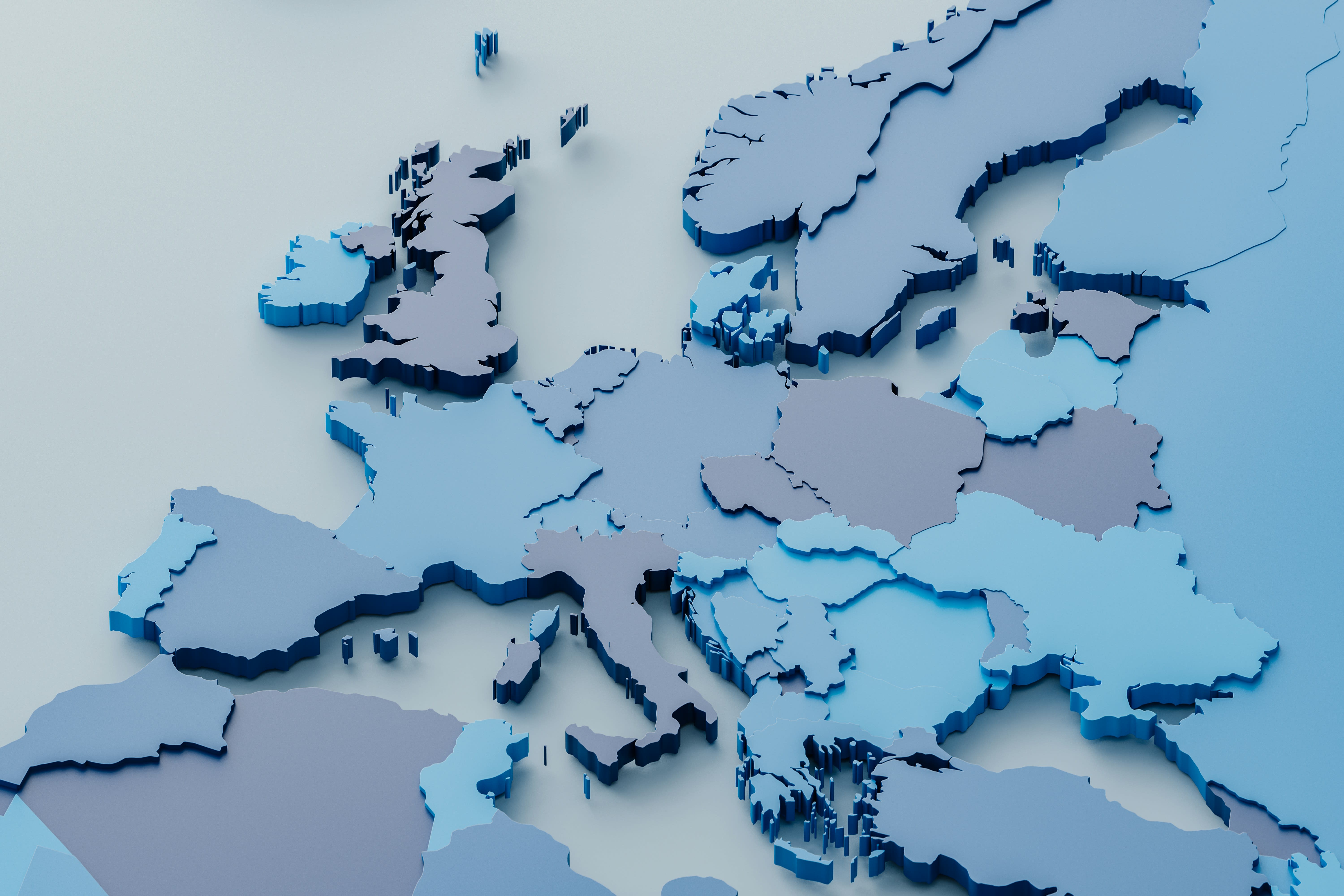
Image Credit: Image by Alex Shuper on Unsplash+