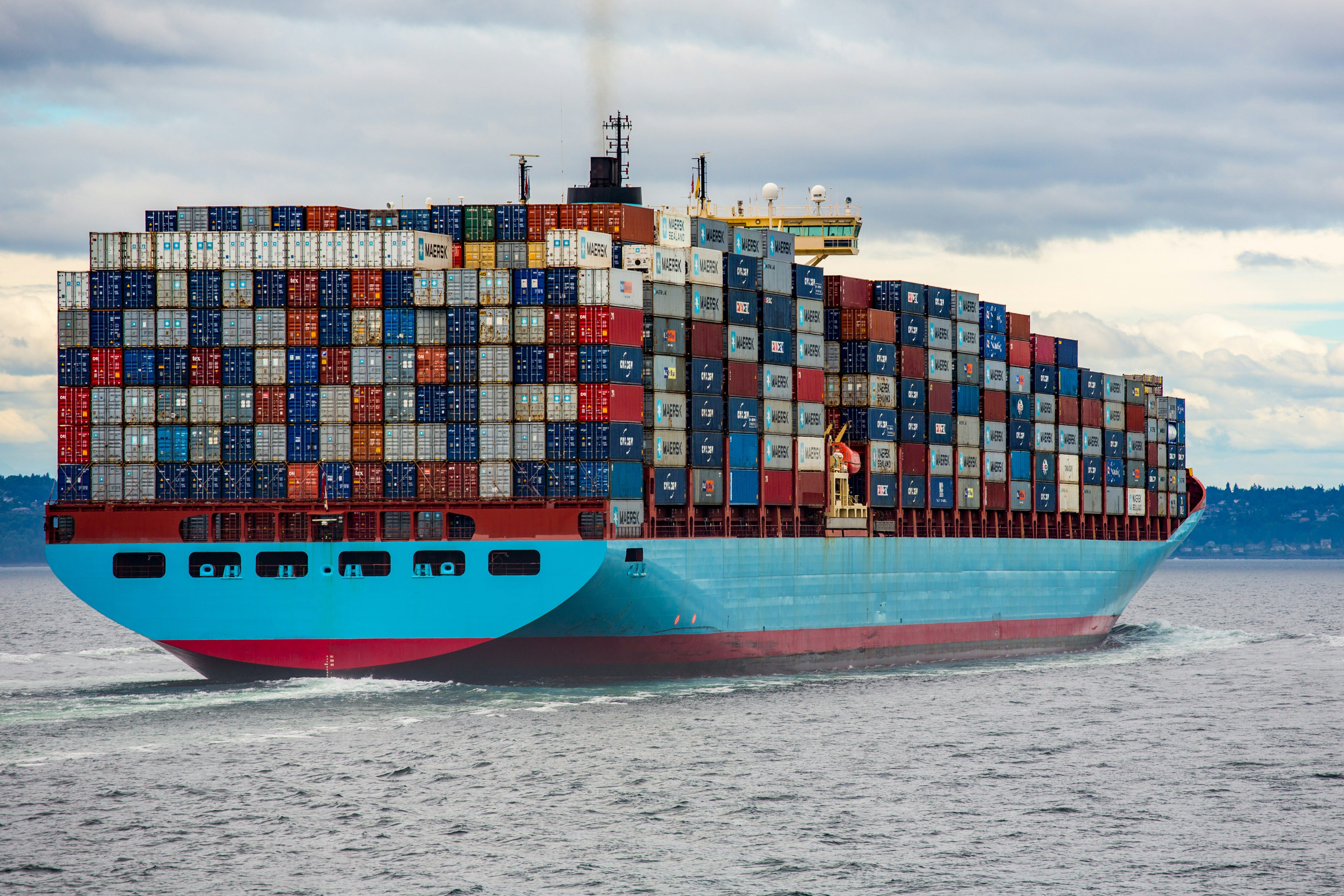
Photo by Ian Taylor on Unsplash
It is sometimes quite hard to watch Donald Trump roll out his foreign economic and trade policy – not to mention his national security policy. And his tariff bullying and threats are especially dismaying. Yet Trump’s determination to use tariffs notwithstanding it such efforts fail in most instances to benefit the United States are no bar to this ‘Local Bully’. But it seems beyond him to assess tariff utility. It has become his policy signature, along with all other aspects of his local bullying. Yet we should be aware that some of these initiatives do show at least some tactical insights.
Notwithstanding the set back to Trump tariffs by the recent decision of the Supreme Court, Trump is beating again his favorite ‘policy drum’ – tariffs. The President already has imposed tariffs on Canada, and many other trade partners, and now he is raising the threat of further tariff impositions – this on August 19th. As described by Marieke Walsh and Adrian Morrow at the Globe and Mail (G&M), one of Canada’s major papers, they first describe the tariffs that have already been imposed:
“In addition to the latest tariff threat, the U.S. President has already imposed tariffs of 50 per cent on steel and aluminum, 25 per cent on autos, 10 per cent on lumber and 25 per cent on wooden furniture under Section 232 of the Trade Expansion Act of 1962.”
And now in addition to those tariffs already applied Trump now threatens a whole new set of additional tariffs:
“Mr. Trump has said he will impose 50-per-cent tariffs on $20-billion worth of Canadian goods on Aug. 19. The punitive tariffs apply to a range of goods, including ones that are supposed to be protected by the countries’ free trade pact.”
“The new tariffs would be particularly damaging for industries in Ontario, B.C. and Quebec. They would follow Mr. Trump’s previous tariffs on autos, steel, aluminum and forestry products, making them especially punishing.”
Now, there is reason to believe that this targeting may in fact be more tactically useful than apparent at first glance. So the new tariffs as described by Adrian Morrow and Mark Rendell, again from G&M:
“The new tariffs would be implemented under Section 338 of the Smoot-Hawley Tariff Act of 1930. While they would affect only about 5 per cent of Canadian exports − a range of goods from alcohol to dairy and electronic equipment − they would hit some industries particularly hard, likely a calculated move to get those sectors to put pressure on Ottawa for a deal. The tariffs would be felt most acutely in Ontario, Quebec and British Columbia − while mostly sparing Alberta and Saskatchewan, the two provinces not boycotting U.S. alcohol.”
As the Economist points out, these tariffs under Smoot-Hawley also seem to provide an ‘easier’ executive pathway for Trump than earlier approaches:
“Europe and the rest of the world should take heed. Mr. Trump has form in attacking Canada first with weapons which he subsequently turns on others, both tariffs and threats to territory. This time, if the new tariffs come into force on August 19th, Canada will be the first country ever to be subjected to tariffs under Section 338 of the Smoot-Hawley Tariff Act, a law passed in 1930 that allows the president to respond to perceived trade discrimination. Tariffs under that act, unlike the emergency duties struck down by the US Supreme Court in February, need no congressional approval. “This looks a lot like the future of Donald Trump’s trade policy because it gives him flexibility,” says Eric Miller, head of the Rideau Potomac Strategy Group, a trade consultancy in Washington.”
And as Matthew Winkler notes in Bloomberg:
“Trump’s 50% tariffs, employing a Depression-era provision of the Smoot-Hawley Tariff Act of 1930 that hasn’t been applied or tested in modern courts, exclude energy, potash, fish and critical minerals. They include [however] goods that had previously been protected from import taxes by the USMCA.”
In the face of the looming threat of new additional tariffs, the Carney government has responded in a number of ways including recently to blunt, to at least some degree, these tariffs. Raisa Patel in the Toronto Star describes a rebate programme recently announced by the Canadian government:
“The Carney Liberals launched a $100-million rebate program on Monday to help Canadian steelmakers sell more product at home, as Ottawa stares down a looming deadline to avert a fresh wave of American tariffs.”
“At a CN rail yard in Hamilton, Transport Minister Steven MacKinnon said the federal program will provide a 50 per cent rebate on rail and marine transportation costs for Canadian steel shipped across provincial and territorial lines.”
“The temporary program is one of the Liberal government’s attempts to alleviate more than a year of trade pain that has seen the White House target a range of strategic sectors, including imposing tariffs of up to 50 per cent on Canadian steel in the name of national security.”
“The rebate program launched Monday and is slated to expire next summer, or until funds dry up. A single steelmaker is able to receive a maximum amount of $50 million through the program, which will disburse funds on a first-come, first-served basis.”
The pressure is evidently on to reach a deal that will prove to be acceptable to Trump. Resolution is vital. But Canadian government officials and negotiators also have expressed concern that further tariffs could be a ‘last straw’ in the back to back discussions between the two government. As described again by Walsh and Morrow in the G&M:
“Canada’s top trade negotiator has warned her American counterparts that if the White House imposes new tariffs on Aug. 19, the move would represent a “cliff” that risks halting negotiations with the U.S.”
“The sources said she warned the officials that Ottawa would not be able to rein in or control the public or premiers’ reactions and the federal government will have lost the room to negotiate with the Americans.”
And if that were to occur, well, not surprisingly the following might well also occur:
“A Canadian retaliation would almost certainly provoke a counter-retaliation by Mr. Trump, ratcheting up the bruising trade war even further, one of the sources said, such that Ms. Charette impressed on Mr. Greer that now was the window to reach a deal.”
Nevertheless, US negotiators remain optimistic:
“U.S. officials are optimistic that a deal can be reached by Aug. 19, the source said, but they are worried about the ability to sell the pact in Canada.”
This relatively positive view of the US-Canada tariff negotiation is also described by Raisa Patel in the Toronto Star that has been following these negotiations closely:
“Canadian and American negotiators hope to present U.S. President Donald Trump with a joint trade proposal in the coming days to head off a new round of U.S. tariffs.”
“One source said there are plans to deliver the proposal to the U.S. president as soon as Monday [August 17th], while another source said a potential pact could come together even earlier.”
“Both sides have been closing in on a “comprehensive” trade deal, the Star has reported, after talks ramped up in recent weeks following Trump’s order last month to impose 50 per cent levies on a wide range of Canadian goods in August. Those tariffs are set to apply to imports covered by the Canada-U.S.-Mexico free trade agreement, which the White House has opted not to renew in its current form.”
“Conversations have revolved around Canada’s willingness to make concessions on a number of trade irritants, including provincial decisions to pull American booze from store shelves, “Buy Canadian” procurement policies, retaliatory tariffs on U.S. autos and Canadian dairy protectionism.”
“One of Mr. Trump’s top demands is for the ban that most premiers have imposed on American alcohol to be lifted. But premiers, in particular from Ontario, Quebec and B.C. have made it clear that they will be the ones to decide when that happens and they have insisted that the 232 tariffs in particular be resolved first.”
Are we close to a ‘cliff’ – it is certainly possible. There could be a strong reaction from the Canadian public. And, several provincial authorities may ‘dig in their heels’ over alcohol sales. As suggested by Walsh and Morrow G&M:
“One of Mr. Trump’s top demands is for the ban that most premiers have imposed on American alcohol to be lifted. But premiers, in particular from Ontario, Quebec and B.C. have made it clear that they will be the ones to decide when that happens and they have insisted that the 232 tariffs in particular be resolved first.”
It is also likely that these tariffs have a strategic element targeting provinces that have opposed US actions most. Again, from Walsh and Morrow:
“The new tariffs would be particularly damaging for industries in Ontario, B.C. and Quebec. They would follow Mr. Trump’s previous tariffs on autos, steel, aluminum and forestry products, making them especially punishing.”
So, in fact there may an element of strategy to the madness. And I am of the view still at this moment that notwithstanding all the shouting and ‘pulling of hair’, a deal can and should ultimately be reached. The bully is here; you can’t miss him. And he is loud, very loud. But is it possible to advance? I suspect it is notwithstanding all the noise.
Finally, just a quick update on the current state of the appointment of the next UN Secretary General. The field is now apparently set. As described by IISD, here it is:
“Subsequently, UN Member States nominated:
· Rafael Mariano Grossi (Argentina), nominated by Argentina on 26
November 2025;· Michelle Bachelet Jeria (Chile), nominated by Chile, Brazil, and
Mexico on 2 February 2026);· Macky Sall (Senegal), nominated by Burundi on 2 March 2026;
· Rebeca Grynspan Mayufis (Costa Rica), nominated by Costa Rica on 3
March 2026;· Virginia Gamba (Argentina), nominated by Maldives on 11 March 2026
(candidacy withdrawn on 25 March 2026);· María Fernanda Espinosa Garcés (Ecuador), nominated by Antigua and
Barbuda on 11 May 2026;· Carolyn Rodrigues Birkett (Guyana), nominated by Guyana on 15 June
2026; and· Olara Otunnu (Uganda), nominated by Uganda on 24 July 2026.”
The selection process is also reasonably clear:
“The tenth Secretary-General will be appointed by the UNGA [UN General Assembly], on the recommendation of the Security Council, in accordance with Article 97 of the UN Charter. Assuming the role in January 2027, the newly appointed Secretary-General will serve a term of five years, which Member States can renew for an additional five years. While technically there is no limit to the number of five-year terms a Secretary-General may serve, none has held office for more than two terms. No woman has ever held the position of Secretary-General.”
In other words, the General Assembly will choose subject to a veto by the permanent members of the Security Council. We will see. The utility of this ultimate multilateral remains all too apparent. But that is for another day’s discussion.