Getty Images Licensed under the Unsplash+ License
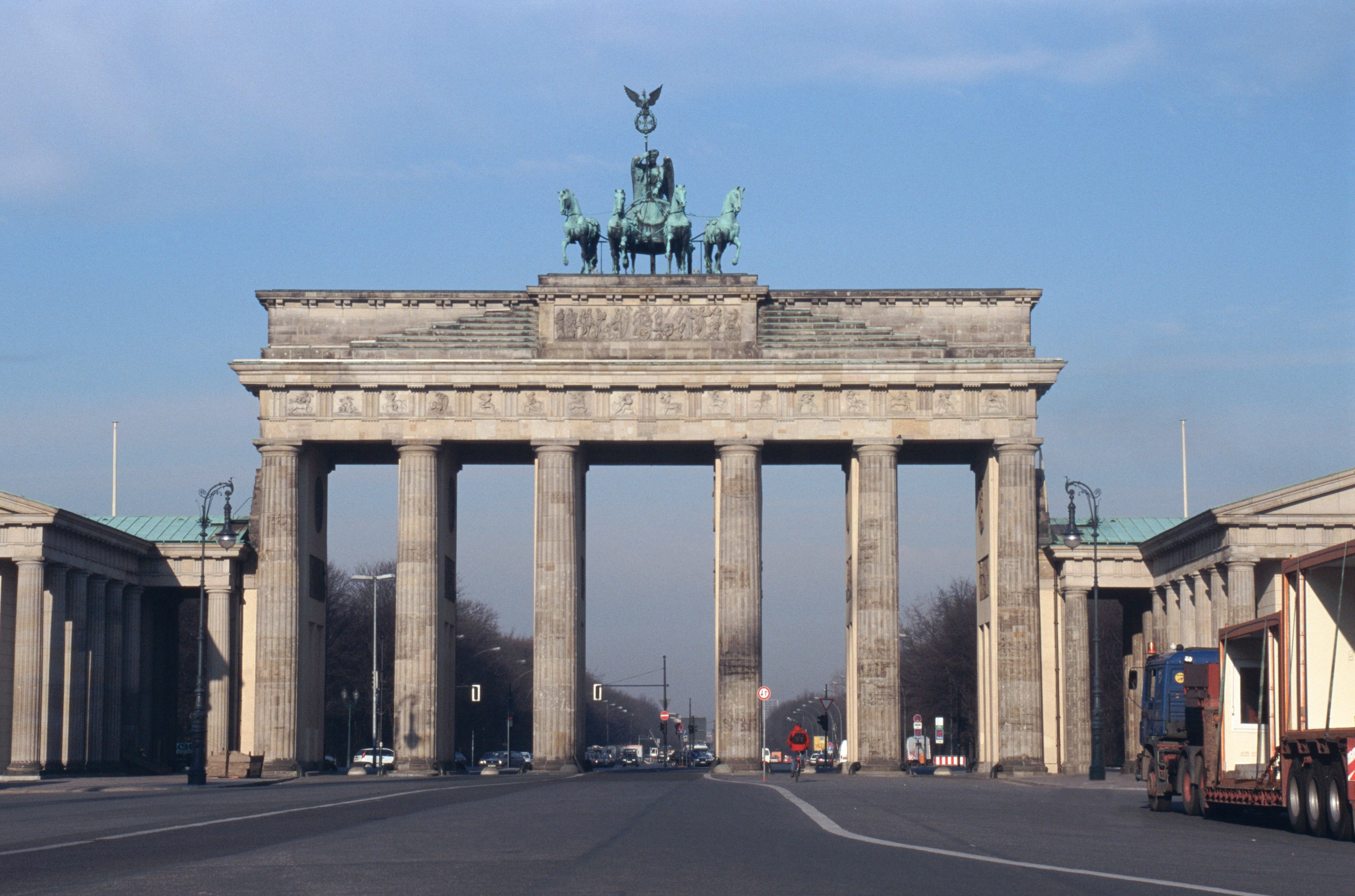
Just back from the 2026 version of the Global Solutions Summit. It was pleasure being with many GSS attendees and some close colleagues. And it is of course a pleasure to be in Berlin. Such a pleasant city.
As described by the Global Solutions Initiative (GSI) principals, this year’s GSS was designed to provide the following:
“Over two immersive days, the Summit brought together leaders, thinkers, and practitioners from government, business, academia, and civil society around one of the defining questions of our time: how do we find common ground in a fractured world?”
Now with the valuable work of my CWD Co-Chair, Colin Bradford, we found ourselves surrounded by colleagues and able to discuss the following in a pre-Conference gathering:
Sunday, May 31st – ‘Brainstorming the future new narratives for the common good’. We took up the following issues:
Foundational Pillar #1 – New Social Economic Policy
Foundational Policy #2 – Global Nuclear Weapons Ceiling to Release Massive Investment in Human Capital
Foundational Pillar # 3 – Review and Recommittal to the Principles of the Charter of the United Nations
Foundational Pillar #4 – Call for an Ecumenical Conference of Leaders of all Religious Faiths
This year’s GSS gave CWD a solid opportunity to discuss a new world order and the four pillars for global governance, with participants sharing their perspectives on the current state of international relations and equally importantly setting out possible future directions. We took the opportunity, where we could, to develop visions for a “new world order” in response to the current breakdown of trust-based international systems that have prevailed in some form since 1945.
On the first day of the Summit we attended, what organizers referred to as a Forum gathering where participants discussed:
Monday, G7/G20 Sherpas The G20 2.0: What Comes after the Reset: Identifying Pathways for Lasting Peace and Stability presented by:
· Brett Savill/Institute for Economics and Peace (Australia)
· Chris Coulter/Berghoff Foundation
· Min-Thu Pham/The Starling Group
· Sanam Naracchi Aderlini/Civil Society Action Network
This discussion was followed immediately by our own session. The GSS organizers were good enough to open a Monday slot, after some solid persuasion by Co-Chair Colin Bradford to discuss with those interested in the critical issues a ‘deep dive’ session where some 15 folk discussed and gave their views on the following CWD described session:
Monday – Deep Dive: “Brainstorming the Future: New Narratives for the Common Good”
The Shape of the Coming Global Order
Through the various sessions we discussed global order changes and economic challenges with participants often reflecting on the fading of the old international order and attempting to describe possible new frameworks even though these had not fully emerged. On reflection, I suppose it was unsurprising that there was no consensus on what the current shape of the global was, or what the order was moving towards.
There was one expressed view that suggested the current global order and its actions reflected in part the pre-World War I global structure. Others referenced rather the post-1945 order; and still others mentioned the post 1989 transition though suggesting a more negative transformation requiring both diagnostic insights and specific recommendations for policymakers. Still another of our colleagues proposed that the world order was in fact moving toward a multipolar system with possibly 5 to 6 major powers including: China, US, EU, and Russia. This multipolar order in his opinion would create a new balance of power that would prevent major wars through mutual deterrence and require cooperation among the major powers. While some acknowledged the emergence of such a multipower order they nevertheless were less sanguine that such a multipower system would be able to remain stable. Finally, some of our colleagues were unclear whether the global order that had emerged with the end of the Cold War had truly ended.
It remained difficult, therefore to determine what new framework might emerge and as a result there was a lively debate: over the role of major powers like the US and China in such a new order; what new economic framework would dominate; and, finally, the importance of cultural and spiritual dimensions in shaping public narratives about the future. There were suggestions that while a new world order might be ideal, political feasibility and action made this unlikely in the next 10 years. Moreover, though it was acknowledged that the continuing maintenance of classic multilateral institutions was predicted and likely to continue, the existing international organizations like the UN and WTO increasingly would find themselves as minor actors in this new emerging order.
In contrast to this earlier pessimistic multilateral presence a more hopeful view was also expressed arguing that the power distribution and the relative decline of the West did create unique challenges but these challenges would lead to new social economic policy focused on: infrastructure investment, people development, and fair taxation rather than military spending. New institutional forms might well emerge including various Middle Power coalitions and initiatives.
While there was no unanimity over the state of the global order or its immediate trajectory and future, the group dove into the possible paths forward and outlines of a possible new paradigm that could possibly integrate economics with society, polity, and environment. Such approaches would necessitate new narratives and policies to address this transformation. As expressed in our later meeting such narratives require many messages and also many messengers. The discussion included various perspectives from experts, including former government officials and academics, with a focus on how to mobilize public support for these changes.
Several strong perspectives emerged. One of our colleagues argued that three transformations were needed: goal alignment focused on human flourishing rather than just economic output; capacity alignment to address current challenges; and policy alignment that would enable policymakers to cross traditional silos. In this view, and if the path was followed one could see a “new alignment” based on coalition-based cooperation rather than universal agreement, focusing on four key principles: human flourishing through: solidarity, agency, material gain, and environmental regeneration. To achieve this possible progress countries needed to form coalitions around specific global challenges with clear guardrails for participation. And finally the view emerged that described the need for a fundamental shift in global economic and social narratives, emphasizing the importance of culture and faith: all drivers beyond traditional economics.
The meeting also had the opportunity to focus on nuclear arms control and deterrence in an emerging, if not already emerged tripolar nuclear environment involving the US, Russia, and China. The speaker, David Ellwood, a mathematician and Pugwash Council member argued that the challenge today is not just deterrence versus disarmament but critically stable deterrence versus qualitative escalation, particularly emphasizing the need ultimately for a US-China dialogue on nuclear issues. It was made clear in his analysis that significant economic costs were and would be further incurred by this US nuclear modernization (estimated currently at $1.5 trillion). In the face of growing destabilization there would be a need for a new approach to arms control that could address missile defense and counterforce capabilities, and there was a need to understand China’s evolving nuclear posture and traditional arms control concerns over its vulnerability resulting in part through a lack of transparency.
David went on to describe rather chillingly the potential climate impact of nuclear conflicts, explaining that even minor regional wars including nuclear exchange could create global environmental damage affecting billions through soot and reduced solar irradiance. The group discussed whether to integrate nuclear security issues into broader macro policy discussions, with participants debating the scale of the challenge and potential policy approaches including critically monitoring and notification enhancements. The conversation also covered broader strategic threats including: AI, drones, and nuclear proliferation concerns, with participants emphasizing the need for strategic restraint and common security approaches rather than great power competition.
The discussion then moved on with a focus on the importance of multilateral cooperation and international treaties in addressing existential threats not only through nuclear war but also climate change and loss of biodiversity. The participants emphasized, in this examination of Pillar 3, the need to update existing treaties to maintain treaty relevance and ensure compliance, particularly involving superpowers in the process. Many topics were raised over the state of multilateralism and multilateral institutions. But one conversation was particularly noteworthy – this an examination of the utility of the UN and the need, the longstanding need, for UN reform.
One of our colleagues has made a significant mark in urging reform of the UN and its ability to impact peace and security. This colleague, Huiyao Henry Wang, the President of CCG (Center for China and Globalization) has for some time proposed to integrate G20 into the UN Security Council to address the poor representation of the UN Security Council members and in part, to tackle the current veto system that has largely rendered the UN unable to address various serious ongoing conflicts. Henry expressed a strong view that reform is necessary to implement standards and recover the UN’s original mission of peace and security. As Henry has written recently:
“The central issue is not whether the UN still matters, but whether its most powerful organ, the Security Council, can adapt to a reality it was never designed to govern.”
“The Security Council was designed for a world shaped by World War II, reflecting the balance of power among the victors and the strategic assumptions of 1945. Its structure has remained static since 1965, with the five permanent members (P5) and ten rotating seats still resembling that pivotal moment after the defeat of the Axis Powers.”
“Accordingly, the pathway forward requires two intertwined reforms tackling its structural and procedural dimensions. Structurally, the Council must expand its membership to better reflect today’s distribution of global power and representation. Procedurally, it must establish a mechanism to curb unilateral use of the veto, ensuring that no single state can indefinitely block an emerging international consensus.”
“First, the Council needs to expand its membership to better reflect the world of today. Second, it should develop a mechanism to limit the use of unilateral vetoes to prevent a single P5 state from thwarting an international consensus. Together, these reforms can revitalize the Security Council’s credibility and capacity, transforming it from a forum of gridlock into a more responsive and effective guardian of peace.”
“To that end, all current G21 (formerly G20) members should be given a seat on an expanded Security Council. This would eliminate the 10 existing rotating seats and create 16 new permanent associate seats. These new states would not have an individual veto, but together with the other four permanent members, they could override the use of the unilateral veto.”
“Previous reform efforts have stumbled over the question of how to allocate new seats in the Council. Using the G21 thus offers an elegant solution. It is composed of an even mix of developed and developing countries. Using it as the basis for reform addresses some of the underrepresentation of the global south while still recognizing the enduring power of incumbent powers. Today, the G21 members account for over 85 percent of global GDP and have already helped coordinate multilateral responses to some of the world’s most pressing economic challenges.”
“To solve the problems created by the unilateral veto, we must weaken it by instituting a supermajority override. Under this proposal, if over two-thirds of the expanded Security Council—that is to say, 15 of its members—and two-thirds of the General Assembly voted to override the veto of a single P5 member, the resolution in question would pass.”
“A single P5 member should not be able to block a UNSC resolution passed by all other permanent members, two-thirds of the 16 permanent associate members, and two-thirds of the 193 members in the General Assembly.”
There were many insights expressed over the time of our discussions. One further topic of discussion that emerged – this with with Pillar 4, with the group focused on the role of faith in global dynamics and the Religious 20 (R20) initiative’s to ensure religion would become part of the solution to world problems. Participants discussed the importance of addressing religious factors alongside economic and security issues, with colleagues sharing insights about cultural diplomacy and an upcoming conference in Morocco on human dignity.
Finally, as we came to a close, one of our colleagues reflected again the new social economic policy efforts by introducing the concept of “local versus global optimization” in economic and security policies. He suggested that leaders often focus on short-term gains at the expense of long-term human security, and proposed creating a joint appeal from religious communities, economists, and security experts to reaffirm UN Charter principles.
The group also discussed how countries like Indonesia demonstrate high levels of human flourishing despite being middle-income, suggesting that community-focused institutional supports may be more important than economic wealth for human well-being.
CWD appeared to align on three tracks for moving forward: a diagnostic overview of global issues, a specific focus on failing global public goods, and priority actions with immediate opportunities like global financial stability. The group acknowledged, as we concluded, the need to move beyond theoretical discussions toward concrete action and agreed to continue with future meetings.
The discussions were intense but seemed to bear real fruit. As further concrete progress is made I shall return to the CWD efforts to advance the 4 Pillars.