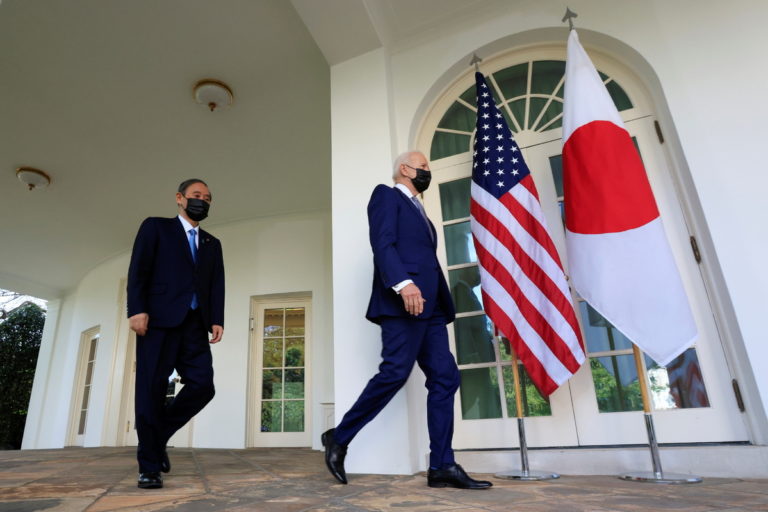
The 2026 Logo for the Spring Meetings brought by the International Monetary Fund (IMF) and the World Bank Group (WBG) in Washington DC – https://www.imfconnect.org/content/imf/en/meetings/SM26.html
So this past week was a busy one. Just back from Washington, now, and I’m giving myself an opportunity to reflect on the experience. Both myself and the Co-Chair of the CWD, Colin Bradford, and indeed a good ‘whack’ of our CWD colleagues travelled to Washington this past week to attend what are called the ‘Spring Meetings’ organized by the International Monetary Fund, the IMF, and the World Bank Group, the WBG. The meetings included the President of the World Bank, Ajay Banga, and the Managing Director of the International Monetary Fund (IMF), Kristalina Georgieva, not to mention a thousands of officials and experts from around the world. And as it turned out, the Spring Meetings served also as an opportunity to launch the T20, or Think Tank 20, for this year, a major Engagement Group of the G20.
But first the Spring Meetings. So what are these annual gatherings all about? A solid description was recently provided by Michael Froman, the President of CFR, the Council on Foreign relations. In his description in ‘The World This. Week’, Froman set out the broad outline of the meetings:
“Every spring, central bank governors and finance ministers from around the world gather in Washington for the Spring Meetings of the International Monetary Fund (IMF) and the World Bank to discuss the state of the global economy, macroeconomic coordination, and financial sector management. The topic dominating discussions this year is the war in Iran—and the ensuing economic fallout.”
So in a variety of settings the current and former IMF and WB and other global and regional financial institution members worried about and sought to clarify what the impact of wars in the Middle East might do to the global economy and global finance. As described by Michael Froman:
“I sat down with IMF Managing Director Kristalina Georgieva last week for a curtain raiser conversation ahead of the Spring Meetings. We discussed the Fund’s macroeconomic outlook, including its latest analysis on how the war is affecting global growth, inflation, and economic stability. I left with a number of takeaways.”
“The first is that while combat operations have largely ceased, uncertainty still reigns. The true economic impact of this war will not be determined by the damage caused so far, but rather how long the ceasefire lasts, the degree to which traffic in the Strait of Hormuz returns to pre-war levels, and the prospects for a durable peace in the region. The first round of direct peace talks last weekend failed to produce a deal. Earlier today, the United States and Iran announced the strait is open for commercial ships, though President Donald Trump posted on Truth Social that the United States will continue to prevent ships from sailing to or from Iranian ports from the Arabian Sea and the Gulf of Oman until a peace agreement is final.”
“… As Georgieva stated so clearly last week, “Even in a best case, there will be no neat and clean return to the status quo ante.” Global shippers and mariners have long memories. Current transit volume in the Bab el-Mandeb Strait is still only half of what it was before the Houthis’ attack on commercial shipping after the events of October 7, 2023.”
The Managing Director came down, in part, on the following:
“At a moment of cascading geopolitical crises, the IMF finds itself not in panic mode but focused on what Georgieva might call “cushioning the Middle East war shock” mode. Part of the explanation lies in an unexpected buffer: the artificial intelligence investment boom, which accounted for as much as 40 percent of U.S. GDP growth over the past year. Yet that tailwind has not blown equally across the globe. The countries bearing the greatest costs of the current shocks are largely not the ones reaping its rewards. And there is no guarantee it will continue.”
So the Managing Director, and the President of the WBG and various other IMF, WBG officials and a slew of other notables were all over the meetings with thoughts and insights of the state of the global economy – and, also, the risks to the global financial system.
You’ll not be surprised, then, that CWD also organized several gatherings, beginning on Tuesday, with the help of our colleague Michael Mochizuki of George Washington University, a full 3-hour CWD global dialogue discussion. This opening discussion was designed, as described by Colin: “The two main issues are “Global Imbalances, Trade and Middle Power Opportunity” and “Global Financial Risks and Surveillance”, with an overview to start on the “State of Play in Multilateral Economic and Financial Cooperation“.
The character of these risks: these global financial risks, and more broadly global imbalances, as well as the leadership of the global financial order in the face of a second Trump administration, all were discussed with various colleagues at intense but very fun dinner settings over 2 evening meals: ‘breaking bread and energetic discussion’ what could be better. And with all the side meetings as well with various experts and officials it all made for an intense but valuable time.
But the fun didn’t stop there. The Spring Meetings afforded an opportunity, as it turned out, to launch the T20 for this year with an opening meeting organized by several colleagues at the Brookings Institution, including Homi Kharas and Amar Bhattacharya but also Trita Parsi from the Quincy Institute for Responsible Statecraft and Richard Ponzio of the Stimson Center. The T20, the Think Tank 20, is part of a broad set of engagement groups that provide insights and views, policy expression designed to assist action and provide policy directions and policy recommendations for the G20 and the G20 Leaders.
The meeting held at Brookings this week launched this year’s T20 efforts but under the burden that the Trump administration, this year’s host of the G20 sadly acknowledged only 1 engagement group, the Business 20, or B20, and no other. Thus, the T20 for 2026, initiated by this inception meeting is styled as an Informal T20. There is unfortunately no US official designated as a contact to receive the policy directions and policy actions of the T20.
Nevertheless, this Informal gathering and initiation drew in person or by Zoom many participants. We heard from Elizabeth Sidiropoulos from SAIIA who held a significant T20 role during the G20 South Africa. And we heard from folks leading the workstreams organized for this year:
· Workstream 1 – Fostering Trade and People-Centered Economic Growth
· Workstream 2 – Safeguarding Energy Security and Resilience
· Workstream 3 – Boosting Innovative Technologies -, including Artificial Intelligence
· Workstream 4 – Mobilizing Finance and Tackling Debt Constraints, including through International Financial Architecture Reform, and
· Workstream 5 – Sustaining and Strengthening Global Coordination on Socioeconomic Development and Peacebuilding
The hope is that each group will produce a set of papers that will be forwarded to the appropriate US G20 official(s). The task has not been made easier by the Trump administration but I am confident that this year’s T20 efforts will ‘bear some fruit’.