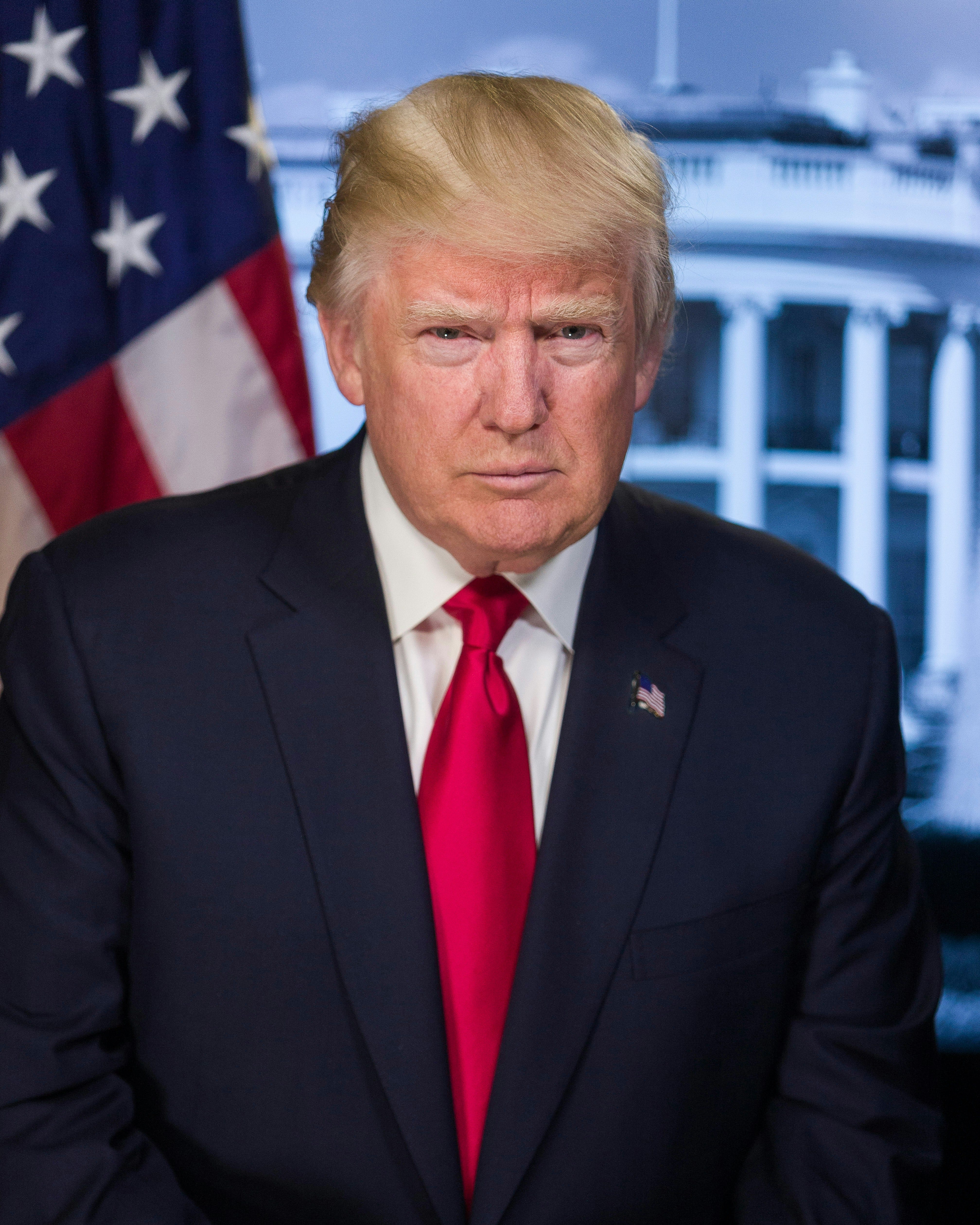
Photo by Library of Congress on Unsplash
Contrasting and indeed confounding views burst upon us this week over Donald Trump and whether he has, and can implement, a coherent US global order strategy with great powers, notably China and Russia. It is ‘head turning’.
First, the more most positive view. This comes from my colleague, Susan Thornton. Susan has been a participant in US-China relations, in the government and out for several years now. She is a former American diplomat who for decades worked on US policy in Eurasia in the State Department before becoming acting
assistant secretary of state for East Asian and Pacific affairs during the
first Trump presidency. She is currently the director of the Forum on
Asia-Pacific Security at the National Committee on American Foreign Policy and is
also a senior fellow at the Paul Tsai China Centre, Yale Law School.
Susan has a careful, yet still relatively positive view of Trump’s current policy actions, at least toward China where she focuses on his recent summit efforts with China’s Xi Jinping. In an interview with Orange Wang from the South China Morning Post, published on October 15th Susan suggested the following:
“The summit was necessary. Leader-level meetings are the only guardrail we really have in US-China relations right now. It is very important that these meetings happen.”
“I’m probably more positive on this than other people because I do think that leader-level meetings in US-China relations are always difficult to put together. And the fact that Trump has done this twice with Xi – once in Beijing and once in Washington – may help regularise such high-level meetings, which we absolutely need to keep the relationship on track right now since we don’t have much else.”
Susan suggests that the Trump administration is trying to regularize these interactions:
“We need to try to normalise these meetings between the US and Chinese leaders if possible. If you have to have a long list of accomplishments all the time, it’s going to be very hard to hold these meetings.”
This appears to underly her understanding of the stated relationship – “constructive strategic stability”.
“In the US, I believe that constructive strategic stability – to the extent that people who agreed to that were really understanding what the Chinese side was talking about – is really about avoiding these worst-case scenarios. Avoiding conflict, avoiding a crisis that leads potentially to a conflict, et cetera.”
“The key is for both sides to understand what those issues are that could lead us there. And I do think we have been making progress in this administration on those issues.”
And she gives some credit to Trump and his people in managing this critical bilateral relationship:
“President Trump does know where [Beijing’s] red lines are on Taiwan. That has been a learning curve probably for him. But he has a pretty firm view on that issue now, and I feel like Beijing has been reassured that he understands what the mainland’s position is.”
“It seems to me that the tension over Taiwan has abated, but the one question that Beijing keeps bringing up concerns Taiwan arms sales. I’m hopeful that the US side can find a way to manage that effectively. We’ve managed it in the past and should be able to do it again. And I think Trump will focus on it and try to take care that it gets done in a way that doesn’t cause a crisis.”
“I see US-China bilateral ties as being in a state of fragile stability.”
These summits and follow on actions appear to Susan to be positive efforts in an always near fraught relationship.
And, what further needs to be done. Susan is clear:
“In addition to the leader-level meetings, what would be important to maintain this constructive stability is the institutionalisation of the relationship, which we’ve lost over the last 10 years. We need to start building that back to maintain stability.”
“The summit in September was the start of an institutionalisation of things that were agreed upon in May in Beijing.”
“For example, the Board of Trade, which was announced in May but really didn’t do much between May and now because of the summits, was actually pressured to meet, set up working groups and talk to one another. There are groups of people under Jamieson Greer and under [Greer’s Chinese counterpart] Li Chenggang who are meeting and talking through these things. You need a lot more connectivity among professionals if you’re going to have stabilisation of this relationship in any way.”
And she concludes:
“Next year they are probably not going to travel as much as they did this year. And that’s another reason the relationship has to be institutionalised in the way that we’ve been talking about. There’s such a thin layer of professional expertise in the government that is plugged in to the other side, and that is probably not going to change too much over the next couple years.”
“President Trump still sees himself as a broker of peace, and so he wants to create these opportunities for dramatic things to happen and big changes in some of the problem areas that we see. Certainly the Russia-Ukraine war is one of them, but North Korea is another one.”
So, he thinks of himself as a ‘broker for peace’. Well, so much for the positive view of Trump foreign policy making. Let’s look to the other side and there is nothing more dismaying then current Trump policy toward Russia and the Russia-Ukraine War. A quick synopsis is provided by Constance Stelzenmuller, the Director of Center on the United States and Europe at the Brookings Institution:
“The past 72 hours have been eventful to say the least: the U.S. president’s “diesel deal” with Russia in contravention of the sweeping sanctions bill signed a month ago, which generated this bipartisan protest letter from 12 senators; a huge Russian bombardment cut power for 600,000 inhabitants of Kyiv, after Ukraine’s military lost access to a military satellite intelligence source supplied by the Pentagon (the U.S. blames bad weather, Kyiv disagrees); and attacks on Starlink terminals in Poland and Bulgaria.”
The details of the access to Starlink remains confused but Tom Friedman in an Opinion piece in the New York Times has no doubts when it comes to Trump actions with regard to diesel fuel and attacks by either side – Russia or Ukraine, in this destructive conflict:
“If President Trump does not understand what will happen to him if he proceeds with his plan to trade away support for Ukraine’s democracy for Russian diesel, let me spell it out: He will enter the history books in the chapter on leaders who sold out their country’s democratic values to appease a dictator.”
“Trump is trying to avoid losing a few seats in Congress — and is likely to be no more successful in achieving his goal than Chamberlain was in achieving his.”
“I have never believed that Trump was somehow an agent of Russia’s leader, Vladimir Putin, or in his pay. It is much worse. He simply does not cherish democracy. He cherishes money. And he has no problem selling the first for the second. When he acts in his own commercial interests, that’s his personal business. When he uses the American presidency to make a buck, it is our collective shame.”
“There is simply no core American value Trump will not sell. Desperate to lower diesel prices, which are hurting Republicans in the midterms, Trump actually made a deal to import diesel fuel from Russia, even though it offers a potential windfall for the Kremlin so it can bomb Ukraine harder — and is unlikely to help lower prices or increase supplies much at all. Worse, his aides then asked Ukraine to refrain from attacks on Russia’s oil refineries, without Trump making the same demand of Putin regarding Ukraine’s energy infrastructure. It makes me sick to my stomach to even type this.”
‘No core American value Trump will not sell.’ Friedman goes on to conclude:
Michael Mandelbaum, the author of the new book “The American Way of Foreign Policy: Ideology, Economics, Democracy,” told me. “Different presidents have given these values different emphases, depending on the circumstances and their own personal predilections.””
“But none have “ever abandoned them entirely — let alone repudiated them,” Mandelbaum added. “In that sense Trump really is unique. Of course, all presidents, including him, have operated in a domestic political environment in which those values are widely shared, which means that he will pay a political price for violating them. But in the short term that isn’t likely to help Ukraine.””
Quite contrasting views. I am not clear how to square the circle on this. While I think Friedman has grasped the essence of Trump and his foreign policy actions, continuing assessment remains. Let’s hope it is not as bleak as Friedman concludes.