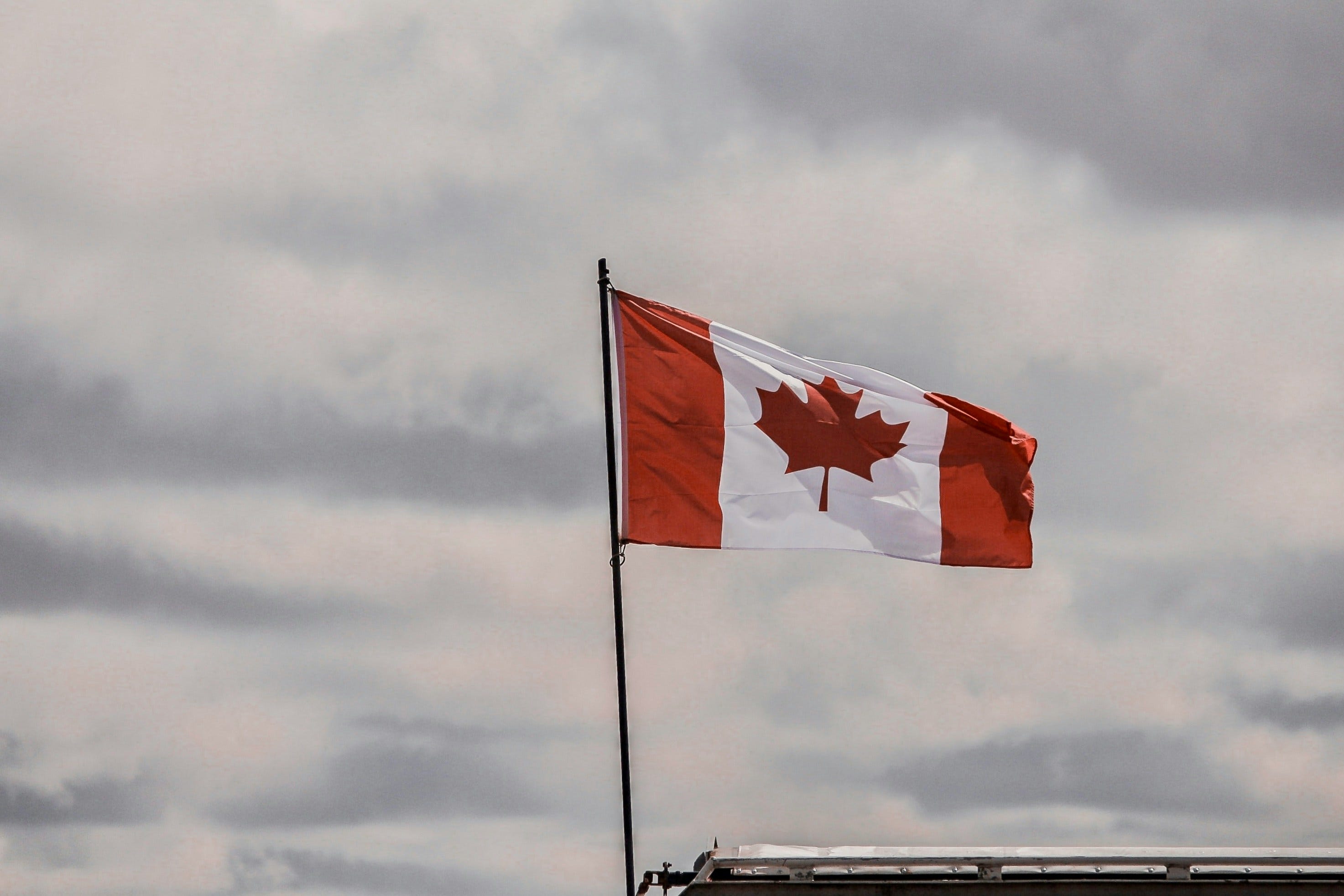
Photo by Paramraj Singh on Unsplash
And the answer – ‘a resounding ‘Yes’. Now, what am I talking about here. Well, rather unsurprisingly, given the numerous headlines and commentary this week, we are talking about the Canadian Prime Minister Mark Carney and his government’s efforts to strengthen Canadian sovereignty and diversify its economy away from – you guessed it, the US economy and I suspect more particularly Donald Trump.
PM Carney has made rather strong headlines through the week. It started with the Prime Minister holding a two day investment conference in Toronto at the beginning of the week. As described by Tim Kiladze in the Globe and Mail:
“During the country’s first-ever Investment Summit, Canadians sitting on panels kept delivering variations of it, and those listening in kept repeating it in private conversations at mini-forums, cocktail hours and dinners connected to the event.”
“For 48 hours in Toronto, one message kept getting repeated: Canada is actually, finally back.”
Erica Alini in the Globe and Mail emphasized the concerted effort by this Prime Minister and his ministers to encourage new investments in Canada:
“The Prime Minister announced the measure at the Canada Investment Summit, a two-day event in Toronto where the government pitched global business executives on investing in major projects, including some of the ports, pipelines and mines that Ottawa has promoted as key to its push for greater economic sovereignty.”
Most dramatically it would seem the Prime Minister offered changes to taxation of investment to highlight the hoped for attractiveness of investment in Canada. Again from Alini:
“Mark Carney unveiled a permanent tax deduction on Tuesday that will allow companies to immediately write off the full cost of acquiring or building a wide range of new business assets, a significant and costly change to the tax system intended to boost productivity and woo global investors.”
“The measure, which the Carney government has dubbed the “productivity mega deduction,” is significantly more ambitious than business investment tax incentives announced by Ottawa in recent memory, including Mr. Carney’s own “productivity super deduction” introduced in 2025. That deduction, which expanded on Trudeau-era policies, allows immediate writeoffs only for narrow categories of investments and for a limited time period.”
“The [new] measure would significantly widen the scope of investments that qualify for an immediate writeoff and would cut the marginal effective tax rate to 6.4 per cent from 13 per cent, the government said, less than half that of the United States.”
““Put it simply, the incentive for companies to invest in Canada is twice as high as it is in the United States,” Mr. Carney said at the summit.”
What’s the Canadian government’s goal? According to the reporting of Tonda MacCharles in the Toronto Star:
“Carney and his team first identified 10 areas as strategic capabilities where vulnerabilities or gaps should be addressed in Canada, among them: energy, cloud and AI compute capacity, critical minerals processing, defence production, intelligence collection, financial payments and settlement, satellite communications, pharmaceuticals, semiconductors, and quantum computing. The prime minister added an 11th: food security.”
““The idea here is that we don’t create a new dependency. We don’t switch from an American satellite provider to a Chinese one, or an American payment system provider to a China one. The idea is that (with) redundancy, we create options,” said the official.”
““We’re actually in a time when integration and sovereignty are in friction,” he [the PM] said. “And for countries that want to retain sovereignty, and Canada wants to retain sovereignty for all the right reasons, including our unique culture, we need to use our assets to an advantage and pair with those that complement them.””
“Carney said he is finding “many opportunities and many like-minded partners,” including in Europe. “The core of this, yes, there’s an economic component, but it is about greater sovereignty, having partnerships.””
“Europe needs Canada’s energy and critical minerals, and Canada can benefit from its clean energy investors and technology. The two have “complementarities” in space, data and AI, and could better align on “people to people ties,” he said, so “there’s areas where we come together and fit together.””
It is in this light one should view the current efforts – initiatives to enlarge and diversify Canada’s trade, investment and potentially also its national security relations. This also speaks to the Prime Minister’s attendance at Ursala von der Leyen’s speech at the EU Parliament that the Prime Minister attended, again in this week, and described in part by Campbell Clark and Paul Waldie. In a Globe and Mail. Their analysis titled, “Carney lays out case for deeper alliance between Canada and the EU” describes the following PM actions:
“His speech to the European Parliament in Strasbourg, France, didn’t directly name the United States, though there was no doubt the country was at the top of Mr. Carney’s mind. Yet the Prime Minister insisted that what he is proposing is a way to strengthen Canada and Europe’s sovereignty rather than build a rival.”
““I am not proposing a third bloc in order to become a great-power rival – only with better manners,” Mr. Carney said.”
““We do not seek power to dominate others. On the contrary, we are pursuing resilience so no one, no one can control our open markets, impair our sovereignty, threaten our territorial integrity, or undermine our freedoms, our democracies, our rule of law.””
“That invitation to take up an as-yet-undefined status that the EU had never used before has left open broad questions as to what it would entail – and to what extent Canada might pool funds and harmonize policies or regulations.”
“At home, Conservatives argued it could mean surrendering a substantial portion of Canada’s sovereignty, and some European leaders expressed qualms about calling the new relationship an associate membership in the EU. Mr. Carney’s delegation preferred to echo another phrase in Ms. von der Leyen’s speech, calling it an “alliance for the future.””
““Sovereignty goes beyond being able to feed, fuel and defend ourselves. It now requires secure access to AI, semiconductors, critical minerals, payment systems, clean energy technologies, vaccines and space-based communications,” he said.”
“Negotiating associate membership, a designation that currently doesn’t exist, would be complex and likely prompt pushback from EU states, 10 of which have never ratified CETA. Canadian opposition parties said Wednesday that Mr. Carney shouldn’t pursue it without seeking parliamentary approval.”
“During the press conference, Mr. Carney appeared to back away from the notion of Canada becoming an associate member, saying that was a term used by the EU. “What matters is the substance,” he said, adding that Canada is not seeking to become a full member.”
“Mr. Carney fleshed out few details but suggested a handful of directions. He said an alliance could include Canadian membership in the EU’s Erasmus student programs to provide more Canadians opportunities to study at European universities, and vice versa.”
“And he noted that Canada could be a secure supplier for the stockpiles of critical minerals the EU is proposing to build, as well as contributing liquid natural gas and hydrogen.”
Now is it ‘clear sailing’. No not even close as described by Tonda MacCharles in the Toronto Star:
“Execution of the Carney plan is a work in progress, and some government officials privately describe a high degree of “chaos” attached to its implementation, with “thinkers” coming up with the guiding principles, but “doers” stuck with the scramble to get it done under a tough taskmaster of a prime minister.”
And beyond the effort to define such a diversification strategy and implementing it there is the looming shadow of President Trump. Again, from Campbell Clark and Paul Waldie at the Globe and Mail:
“But Mr. Trump’s warning on Wednesday that he could consider the European invitation to associated membership a “hostile act” if it was done with “bad intentions” left a vague but ominous threat over the proposal.” …
“Mr. Trump threatened to take action against the European Union if it moves forward with Ms. von der Leyen’s proposal.”
““If they do that, if I think it’s at all a hostile act, I will put very serious tariffs or stop trading with Europe on many things,” Mr. Trump told reporters en route to an event in North Carolina, calling the proposal “laughable.””
““If it’s a good intention, that’s fine. If it’s a bad intention, we’ll put very heavy tariffs on Europe,” he added.”
EU associate or ‘alliance for the future’ what is called for is encouraging greater global investment and success in enlarging trade to Europe and the Indo-Pacific. It will take great and concerted effort well beyond words and wishes. We will see.